
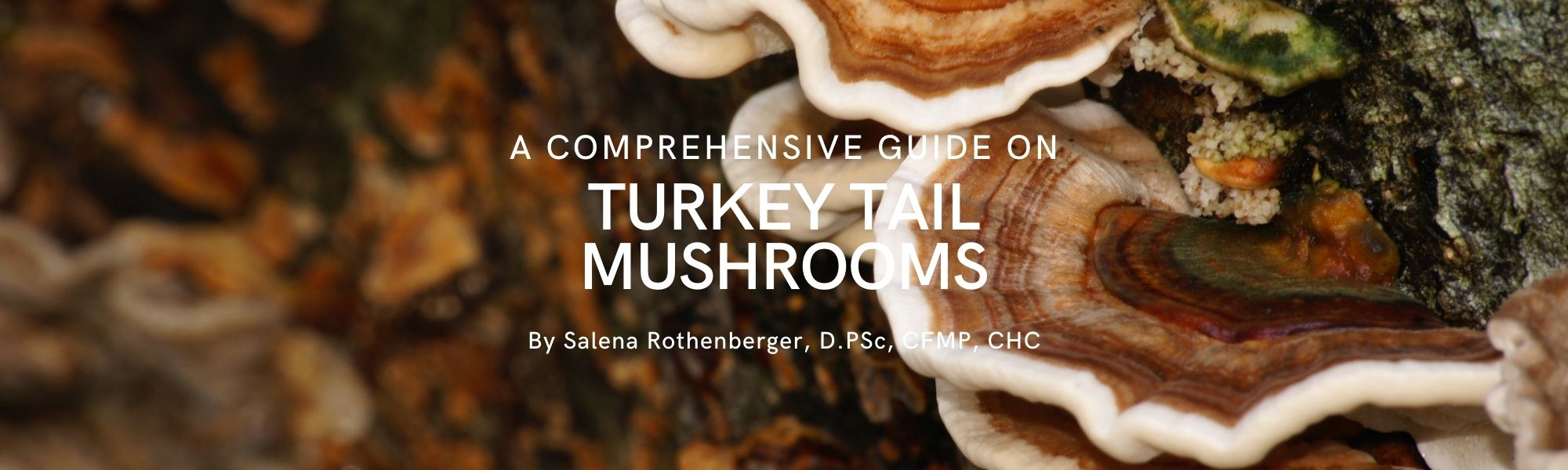
Turkey Tail Mushrooms (Trametes versicolor): Mechanisms, Uses, and Safety Considerations
Educational content for general wellness. Not medical advice. Always consult your practitioner, especially if you take prescription medications or manage chronic conditions.
What Are Medicinal Mushrooms?
Medicinal mushrooms are more than culinary ingredients — they are a rich source of bioactive compounds that offer diverse health benefits. These compounds include polysaccharides, triterpenes, and secondary metabolites, which research has linked to immunomodulation, antioxidant effects, and potential anti-cancer activity. Wild mushrooms are considered a hidden treasure of novel bioactive compounds, with Turkey Tail (Trametes versicolor) among the most widely studied and therapeutically promising.
What is Turkey Tail?
Trametes versicolor (commonly called Turkey Tail for its colorful rings) has been used for centuries in Traditional Chinese and Japanese medicine. Modern science now confirms that its β-glucans, polysaccharide-K (PSK), and polysaccharopeptide (PSP) compounds interact with the immune system as biological response modifiers. Rather than simply boosting or suppressing immunity, they help the body respond appropriately — supporting resilience while minimizing unnecessary inflammation.
Mechanisms of Action (Th1/Th2/Th17, Cytokines, NK Cells)
Turkey Tail’s best-documented actions relate to immune modulation—tuning inflammatory tone and cell-mediated responses across multiple checkpoints. To make sense of this, it helps to picture how the immune “security team” works when everything is in balance:
Immune Response 101 (Immune Tolerance Explained)
- Antigens (the intruders): Anything foreign to our body — toxins, pathogens, or environmental exposures — can trigger an immune response.
- Antigen-Presenting Cells (the body’s security guards): These guards patrol and identify antigens. When they find something suspicious, they raise the alarm and show the immune system what to target.
- B-Cells (the handcuffs): Once a threat is identified, B-cells produce antibodies that “bind up” antigens, much like cuffing intruders so they can’t move freely.
- Natural Killer (NK) Cells (the army): These are your rapid-response soldiers. They directly attack infected or abnormal cells and call in reinforcements when needed.
Important: Both extremes are a problem — too many over-activated NK cells can fuel inflammation, while too few leave you vulnerable. In my clinic, I often see clients with depressed NK cell counts because they assumed NK cells are “bad.” The truth is that balance is vital.
- T-Suppressor Cells (the peacekeepers): These cells shut down the attack once the battle is over. Without them, the immune system may keep firing, leading to chronic inflammation.
1) Pattern Recognition & Innate Immunity
- β-glucans bind receptors such as Dectin‑1 (and may interface with TLRs), which act like the body’s early-warning sensors. This primes macrophages and improves antigen presentation.
- Think of motion‑detector lights around a house: the lights don’t stop intruders themselves, but they alert the whole security system. Likewise, β‑glucans help “light up” threats so the rest of your immune defense is ready.
2) Th1/Th2 Balance
- Compounds in Turkey Tail are reported to support a more balanced Th1/Th2 profile: strengthening underactive Th1 defenses while tempering excessive Th2 reactivity common in allergies.
3) Th17 & Pro‑inflammatory Cytokines
- Emerging data indicate effects on Th17 signaling and cytokines including IL‑6, IL‑17, and TNF‑α, helping reduce inappropriate inflammatory tone without blunt suppression.
4) Treg & Anti‑inflammatory Signaling
- Some observations suggest support for regulatory pathways, including signals like IL‑10, consistent with improved immune tolerance.
5) Gut–Immune Axis
- PSP and related polysaccharides exhibit prebiotic effects, encouraging beneficial microbes and shifting systemic immune behavior via the GALT.
Vehicle analogy: This balance — recognizing genuine threats, responding appropriately, then calming down — is what we call immune tolerance. Turkey Tail interacts with pathways (Th1/Th2/Th17, cytokines like IL‑6 and IL‑10, NK cells) to help recalibrate that balance. It’s vital to understand that even natural supplements can shift this balance. As I often share in my talks, we wouldn’t expect a car to run if we filled the tank with water, skipped fueling in the middle of a race, or left the engine running day and night — yet many people treat their bodies this way. Just as high‑performance cars require the right fuel, timing, and care, our immune system requires balance and rhythm. Health isn’t one‑size‑fits‑all; it’s about tuning all the moving parts to work together, not focusing on one piece in isolation.
Analogy and phrasing © Salena Rothenberger, D.PSc, CFMP, CHC — The Functional Perspective.
Potential Uses of Turkey Tail
- Immune resilience: Support during higher-demand seasons, travel, or stress.
- Oncology adjunct (practitioner-guided): PSK/PSP have been studied alongside conventional care in specific contexts.
- Gut health: Prebiotic signaling can support microbial balance and barrier integrity.
- Overall vitality: Many users report steadier energy and recovery, likely tied to immune/inflammatory tone.
For a practitioner-grade option that combines fruiting body and mycelium, see our store listing: Turkey Tail Mushrooms (Professional Health Products®).
Quick Q&A on Medicinal Mushrooms
How do mushroom polysaccharides contribute to health?
Polysaccharides are the key bioactive compounds in mushrooms. In Turkey Tail, PSK and PSP have demonstrated roles in immune modulation and cancer therapy. They also influence glucose homeostasis, showing potential in anti-diabetes research.
Can Turkey Tail help in cancer therapy?
Turkey Tail polysaccharides (especially PSK and PSP) have been studied as supportive agents in gastric, breast, and colorectal cancer. They may enhance immune resilience and improve tolerance to conventional therapy, though always under oncologist guidance.
Do mushrooms have anti-diabetic potential?
Research indicates that Turkey Tail polysaccharopeptides can regulate glucose homeostasis in insulin-resistant cells. This makes them promising as part of broader strategies for metabolic health.
Timeline of Research Discoveries
- Ancient Use
- Traditional Chinese and Japanese medicine long valued Turkey Tail for immune health.
- 2016
- Identification of antioxidant and AChE inhibitory compounds in Trametes versicolor (Janjušević et al., 2017).
- 2018
- Studies highlight glucose-regulating effects of Turkey Tail polysaccharopeptides (Teng et al., 2018). Recognized as a potential source for cancer therapy (Blagodatski et al., 2018).
- 2020
- Focus on Turkey Tail polysaccharides in cancer therapy targets and efficacy (Habtemariam, 2020).
- 2022
- Review of mushroom polysaccharides in anti-diabetes mechanisms (Liu et al., 2022).
- 2023
- Scoping review of Turkey Tail therapeutic effects on gastric, breast, and colorectal cancers (Dan et al., 2023). Emphasis on wild mushrooms as hidden treasures of bioactive compounds (Gebreyohannes & Sbhatu, 2023).
- Present
- Ongoing clinical applications in immune modulation, supportive cancer care, and metabolic health.
Who Should Not Use Turkey Tail?
- Immunosuppressive therapy: Organ transplant recipients or those on biologics for autoimmunity — only under prescribing specialist guidance.
- Active chemotherapy/radiation: Sometimes used adjunctively (PSK/PSP), but only under oncologist direction.
- Autoimmune flares: Immune modulation isn’t universally indicated in all phases.
- Mushroom allergy: Rare, but possible.
- Pregnancy/lactation: Insufficient safety data.
How to Choose a Quality Supplement
- Full-spectrum: Includes both fruiting body and mycelium.
- Standardization & testing: Third-party testing for β-glucans, PSK, PSP.
- Practitioner-grade sourcing: Consistent quality and safety standards.
Shop Turkey Tail Mushrooms at The Functional Perspective Store
Frequently Asked Questions
Is Turkey Tail safe long-term?
Most clinical studies report Turkey Tail as well tolerated. Mild digestive upset is the most common side effect. Always work with your practitioner for dosage and duration.
How does Turkey Tail affect Th1 and Th2 balance?
Turkey Tail polysaccharides may help balance Th1/Th2 responses — strengthening weak Th1 activity while tempering overactive Th2 reactivity common in allergies.
Are wild mushrooms really a hidden treasure?
Yes — many species contain unique bioactive compounds not yet fully explored. Researchers highlight their potential for future therapies, from anti-cancer agents to metabolic support.
References
Author: Salena Rothenberger, D.PSc, CFMP, CHC — The Functional Perspective
© 2025 The Functional Perspective. All rights reserved.